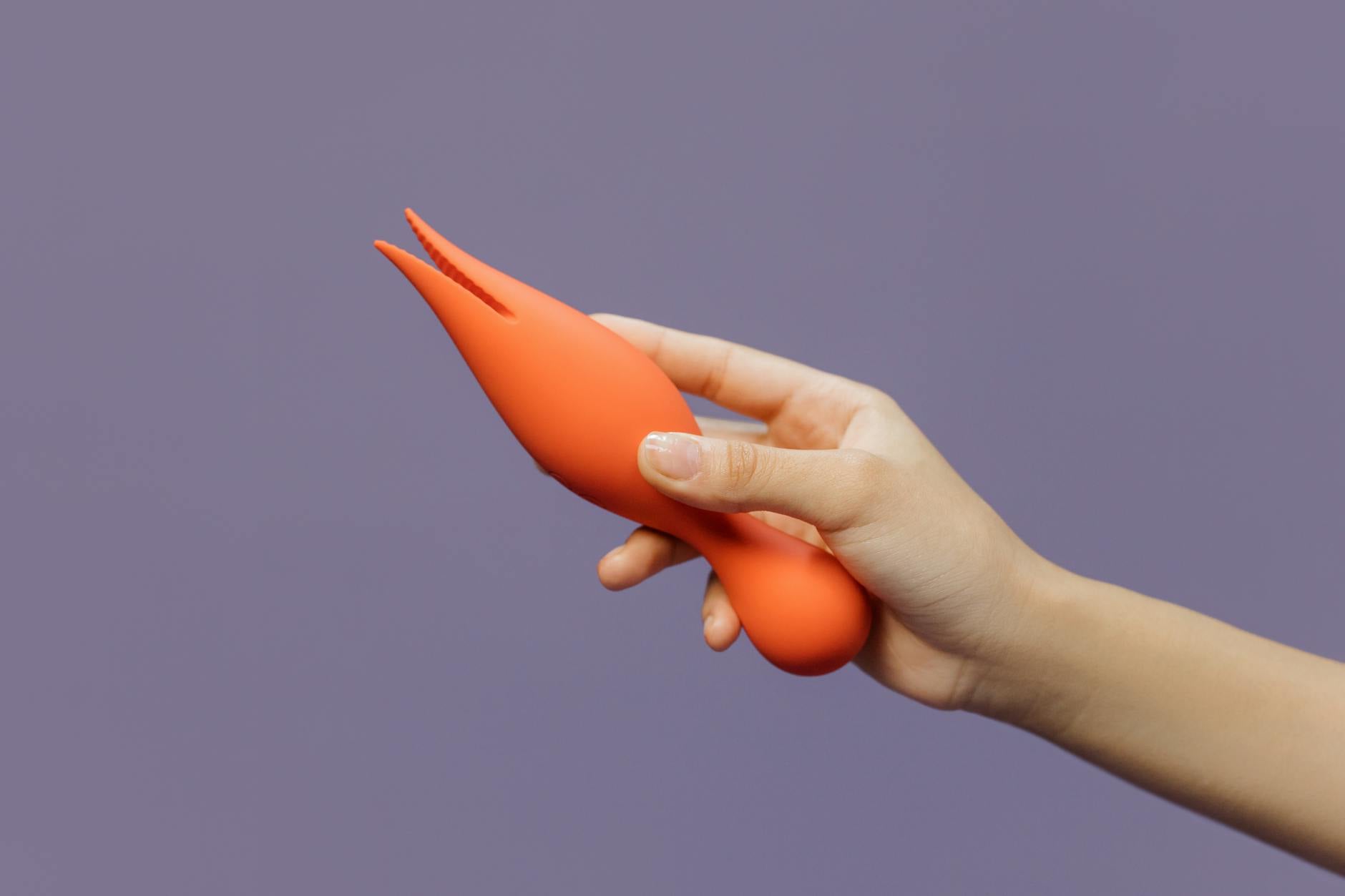
The awkward truth about switching toy types
Let's be real: if you've spent years with a wand vibrator, picking up a lemon clitoral vibrator for the first time can feel genuinely confusing. It's not better or worse, it's just fundamentally different. The sensation is nothing like what you're used to, and that's not a flaw in the toy or in you.
I work with a lot of people making this exact switch, and the most common reaction I hear is "Is it supposed to feel so... gentle?" The answer is yes. A lemon vibrator uses air-pulse suction technology instead of oscillation, which means your nervous system receives a completely different signal. Understanding that difference ahead of time makes the transition smooth instead of frustrating.
Why wand vibrators and lemon clitoral vibrators feel so different
Wand vibrators work by moving back and forth at high frequency (sometimes 3,200 oscillations per minute or more). That movement travels through tissue and builds intensity quickly. It's direct, it's predictable, and if you've calibrated your body to it over years, you know exactly what you're getting.
A lemon clitoral vibrator, by contrast, creates a rhythmic pulse of air and suction that gently draws tissue inward. There's no friction, no grinding sensation. Instead, you feel a lifting, a subtle pressure wave that moves deeper and differently than surface stimulation.
Here's the kicker: many people report that lemon suction toys eventually feel more intense than vibrators, even though they start out seeming gentler. That's because the suction engages deeper nerve clusters and builds sensation in layers rather than all at once.
Expect the first session to feel underwhelming
That's not a problem. That's actually the design working correctly.
When you first use a lemon vibrator (like the Lem from Hello Nancy), start it on the lowest setting. Place it gently against your clitoris without pressing hard. You might feel almost nothing at first. That's normal. Your body has been trained by wand vibrators to expect intensity immediately, and now it's receiving something subtle instead.
Give it 30 seconds. Let the sensation build. Many people make the mistake of increasing the power right away because they assume the toy isn't working. Instead, stay at setting 1 or 2 for a full minute. Watch your body's response. You might feel a gentle warmth, a subtle pulse, maybe even that distinctive "lifting" sensation that suction creates.
If after 2 minutes you genuinely feel nothing, try moving the toy slightly or adjusting the angle. The sweet spot is usually at the center or upper part of the clitoris, not pressed firmly but held in place with light contact.
The adjustment period and what's actually happening
Your nervous system is literally rewiring during the first few sessions. When you've spent years training your body to respond to rapid vibration, switching to suction is like learning a new language for pleasure. It takes your brain a minute to translate.
I typically see people need 3 to 5 tries before lemon clitoral vibrators "click" for them. By the third use, the sensation often becomes noticeably more powerful and more pleasurable. By the fifth, many people are amazed at what they were barely feeling in session one.
During this window, don't abandon the toy if the first session doesn't blow your mind. That's like judging a book after the introduction. The adjustment is real, and it's not about the toy being weak. It's about your pleasure pathways recalibrating.
The sensation progression and how to work with it
Once you're a few sessions in, here's what usually unfolds:
Sessions 1-2: Gentle, almost confusing. You might feel it, but not intensely. Resistance is normal. Don't force it.
Sessions 3-4: The sensation becomes more distinct. You start to recognize the pulse, the rhythm, the depth. Some people have their first orgasm here, others need more time.
Sessions 5+: The toy becomes powerful. Orgasms often become easier, sometimes more intense, and the whole thing feels intuitive.
That progression isn't a bug, it's a feature. Your body is learning to respond to a new type of stimulation, and that learning curve actually deepens the eventual pleasure.
Why you might want to use both for a while
There's zero reason to ditch your wand vibrator immediately. Some of the people I work with find that alternating between the two during the adjustment period actually accelerates the process. You get the familiar pleasure from the wand, then you spend a few minutes on the lemon vibrator, then back to the wand if you want to finish.
That's not cheating. That's being intelligent about your own pleasure. Your body isn't loyal to one toy. It's interested in sensation, and sensation comes in different flavors.
Some people also discover that using a wand vibrator first, then switching to a lemon clitoral vibrator, actually makes the suction feel stronger. That's because you've already activated the nerve endings. The suction then feels like an amplification rather than a completely foreign sensation.
Common mistakes people make during the transition
Pressing too hard. Lemon suction toys work best with light contact. If you bear down, you're fighting the seal the toy is trying to create. Light touch, always.
Increasing intensity too fast. There's no race. Start at level 1, spend time there, gradually explore the other settings. You've got nowhere to be.
Assuming something is wrong if you don't orgasm immediately. Orgasms aren't the only measure of a toy working. Pleasure, sensation, and novelty matter too. Some people spend their first month just enjoying the sensation without climaxing, and that's completely fine.
Not adjusting your lubrication strategy. Most people don't need lube for wand vibrators. Many find that a tiny amount of water-based lube helps a lemon vibrator create a better seal and feel more comfortable. It's not required, but it often helps during the adjustment period.
Using it once, then shelving it. One session isn't enough data. Give it five before you decide.
How long does the adjustment actually take
It depends on your body, your history with wand vibrators, and your expectations. Some people feel the shift in two or three uses. Others take two or three weeks of regular use before the sensation "wakes up" for them.
If you're someone who has relied heavily on wand vibrators for years, you might need slightly longer. That's not because there's anything wrong with you or the toy. Your nervous system has been trained in a particular pattern, and retraining takes time.
The good news: once the adjustment is done, the sensitivity to lemon clitoral vibrator stimulation usually stays elevated. You don't reset every time. Your body remembers.
Why some people stay with wands (and that's okay too)
Not everyone loves lemon suction toys. Some people try the adjustment period, give it genuine effort, and still prefer the intensity and directness of a wand vibrator. That's not a failure. That's data about your own body.
Pleasure isn't a hierarchy. A lemon clitoral vibrator isn't "better" than a wand. It's different. If wand vibrators work for you, they work for you. But if you've been curious, the adjustment period I've outlined above gives you the best chance of finding out what lemon suction feels like for your unique nervous system.
Bringing it into partnered situations
If you're making this switch while in a relationship or partnership, communication helps. Let your partner know you're experimenting with a new sensation type, and that the first few sessions might feel different for you. Some people want their partner present and curious during the adjustment. Others prefer to explore solo first, then share what they've learned.
There's no right way. The only wrong move is assuming your partner can read your nervous system. If you need something different during the transition, say it. "I'm learning this toy, so I might take longer to finish, and that's not about you." That one sentence removes so much pressure.
The real reason to make the switch
Honestly, it comes down to novelty and depth. If wand vibrators still feel amazing, keep using them. But if you've noticed your body building tolerance, or if the sensation has become a bit predictable, a lemon clitoral vibrator offers something genuinely different.
That difference is often where people rediscover pleasure that felt like it was fading. Not because the toy is magic, but because your nervous system responds to novelty. New sensations, new depths, new rhythms all register as alive in ways that repetition sometimes doesn't.
The transition takes patience. But on the other side of it, you often end up with access to sensations you didn't know were possible.
People also ask
Why does a lemon vibrator feel weaker than my wand vibrator at first?
It's not weaker, it's different. Wand vibrators deliver stimulation through rapid oscillation across the surface. A lemon clitoral vibrator uses suction to draw tissue inward, which engages deeper nerve clusters. That depth sometimes takes a few sessions for your body to recognize as pleasure. It's like the difference between a massage on your skin versus pressure deeper in the muscle. Both are real, but they feel completely different.
Can I use a lemon vibrator if I've never used wand vibrators?
Absolutely. If you're starting with suction toys without a wand vibrator history, you might actually adjust faster because your nervous system isn't comparing it to something else. The adjustment period might be shorter or almost nonexistent. If you've only ever used wands, though, the transition I've described above applies.
How many times should I try a lemon vibrator before giving up?
I recommend five sessions minimum, spread over at least two weeks. That gives your nervous system enough repeated exposure to learn the new sensation pattern. If after five genuine attempts (at least 5 to 10 minutes each) you still feel nothing, it might not be your toy. But most people report a meaningful shift happens somewhere in that window.
Is there a way to speed up the adjustment to lemon suction toys?
Yes. Start with solo exploration so there's no performance pressure. Use a small amount of water-based lube to help with the seal. Spend time on lower settings rather than jumping to high power. And honestly, talking to a partner about it beforehand removes a lot of mental friction. Your nervous system relaxes when you're not worrying about whether you're "doing it right."
Do I need to buy a new toy, or can I experiment with a friend's lemon vibrator?
You can definitely try a friend's toy to see if the sensation interests you. But here's the practical thing: if you're going to commit to the five-session adjustment period, it helps to have your own toy. It's more hygienic, you can control cleanliness, and there's something about owning your own pleasure device that removes psychological hesitation. Plus, you won't feel rushed if you're borrowing.
What if my partner loves wand vibrators but I want to try lemon toys together?
You don't have to choose. Many couples use both in the same session. Your partner can use the wand, you use the lemon vibrator. Or you take turns. Or you use them simultaneously in different ways. Pleasure doesn't have to be one-tool-fits-all. The adjustment period I've described is mostly about solo exploration anyway, which means you're learning your own body's response. Bring that knowledge into partnered sessions after you've figured out what works for you alone.
Getting started with the transition
The switch from wand vibrators to lemon clitoral vibrators isn't instant, but it's usually worth the patience. Your nervous system is capable of learning new pleasure patterns at any age. The five-session minimum, the light touch, the willingness to start at low power, the permission to feel confused at first. That's the roadmap.
If you're ready to start, give yourself grace during the adjustment. Your body isn't broken. The toy isn't weak. You're just learning a new language for sensation. And once that language clicks, you often unlock sensations you forgot were possible.
If you have questions about making the switch or about your body's response, I'm reachable at Hello Nancy's contact page. That's what I'm here for.