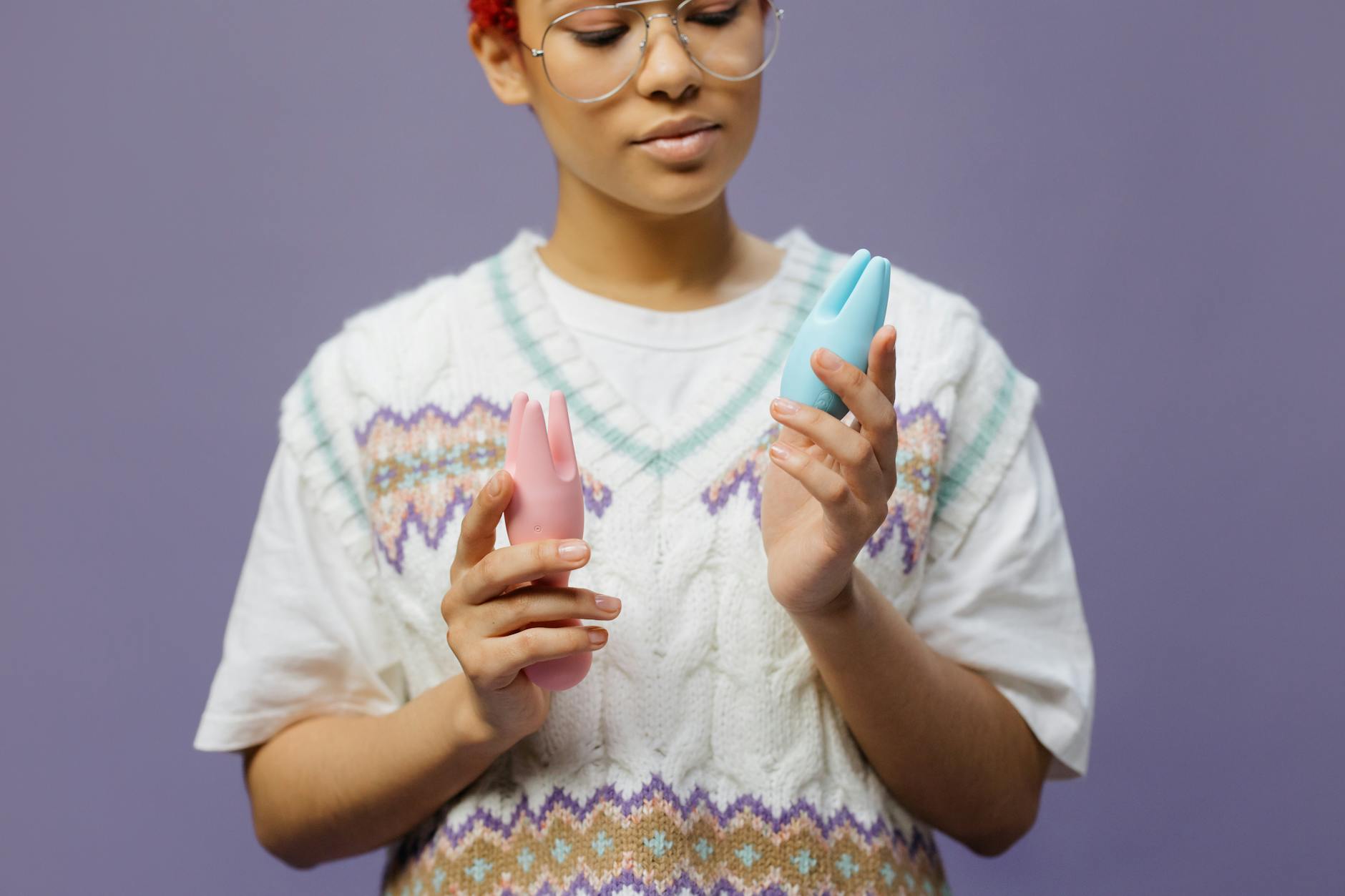
Let's be real about this one
When a long relationship ends, or when you've spent years prioritizing a partner's pleasure over your own, touching yourself can feel genuinely strange. Not in a fun way. In a "who is this person and why am I here alone" kind of way. That's not broken. That's actually really common, and it's fixable.
The thing about solo pleasure after coupling is that it requires a different kind of attention. Not more effort, but a different energy. Lemon clitoral vibrators help bridge that gap because they work with your body's natural responses rather than against them, which means you can get reacquainted with sensation without performative pressure.
Why solo play feels different after a relationship
When you've been with a partner for years, your nervous system gets trained to associate pleasure with someone else's presence. Your body learned rhythms built around their body, their timing, their gaze. Even if the relationship wasn't great, your pleasure patterns formed around that dynamic. Then suddenly you're alone, and your brain doesn't know what to do with your own touch.
Add shame into the mix (and for a lot of people there is some), and solo sex starts to feel less like reconnection and more like admitting defeat. That narrative is garbage, but it's loud.
Here's what actually happens physiologically: your clitoris doesn't care if you're with someone or alone. The nerves are the same. The capacity for sensation is unchanged. What's shifted is the mental load. You're not being watched. There's no dynamic to manage. There's no one else's pleasure to track. In theory, that should make solo play easier. In practice, it can make it feel emptier if you're not intentional about what you're doing.
The lemon vibrator advantage for solo play
Lemon clitoral vibrators work differently than traditional vibrators because they use gentle suction and pulsing patterns instead of direct buzzing. For someone reconnecting with solo pleasure, this matters for three reasons.
First, the sensation is distinct enough that it doesn't feel like you're replicating what a partner would do. You're doing something for yourself that's specifically designed for clitoral pleasure. It breaks the echo chamber of familiar routines.
Second, suction-based stimulation is gentler on the clitoris than traditional vibration, which means you can spend longer with sensation without numbness or discomfort. That longer window gives your body time to settle into pleasure without distraction.
Third, lemon vibrators have multiple intensity levels and patterns. That built-in variety means you're not just turning it on and off. You're exploring what your body responds to. That exploration is actually the whole point of solo play right now.
Building a solo pleasure routine that works
Start small. Not because you should ease into pleasure, but because you're building a habit, and habits stick when they're sustainable.
Pick a time when you have zero obligations for the next 30 minutes. Not rushed morning bathroom time. Not late night when you're already exhausted. A time when your nervous system is actually available. Afternoon on a weekend works well for most people. Your brain knows the difference between "I carved out time for this" and "I'm squeezing it in."
Set a simple boundary: phone in another room, door closed if you live with others. You're not creating a spa day experience. You're just removing the constant low-level anxiety of interruption. That nervous system regulation is half the work.
Start with your hands. Seriously. Spend 10 minutes touching your clitoris, your labia, your thighs. No lemon vibrator yet. You're reminding your body what your own touch feels like. This is not foreplay. This is data collection. Notice what pressure feels good. Notice where you go tight. Notice if you clench your pelvic floor. Most people reconnecting with solo play discover they're holding tension without realizing it.
Then introduce the lemon vibrator. Start on the lowest intensity. Spend a few minutes just getting used to the sensation. It will feel different from your hand. That's the point. You're not trying to climax. You're trying to be curious about what your body does with this new input.
The mental part is actually the technical part
Honestly, the biggest obstacle to solo play after coupling isn't physical. It's the voice in your head narrating the whole thing. "Is this weird? Am I taking too long? Should I be climaxing by now? Why do I feel sad?" That voice is louder than sensation, and it will tank the whole experience.
One practical fix: narrate something else. Not dirty talk to an imaginary partner. Just simple observation. "My clitoris is sensitive right now. This pattern feels good. My body is warming up." Boring, clinical language that keeps your brain engaged without introducing performance pressure.
If sadness shows up, that's not a sign you're doing something wrong. Endings carry grief, even good ones. Your body releases emotion through pleasure. Let it happen. Cry a little, breathe, keep going. You don't need to fix it.
Photo by Ron Lach on Pexels
Patience with your own body
Your clitoris didn't forget how to feel pleasure. But your mind might have forgotten that you deserve to experience it alone, without apology or narrative about what it means. That's the real reconnection.
Start with the goal of spending 20 minutes exploring sensation. Not 20 minutes trying to come. The difference is everything. When climax is the goal, your nervous system tenses. When exploration is the goal, your nervous system relaxes. Climax often comes as a side effect of relaxation. Rarely as a result of hunting for it.
If you don't climax in the first few sessions, that's normal. Your body is learning a new pattern. It took time to build pleasure patterns with a partner. It takes time to rebuild them alone. Most people report that after 4-6 sessions with a lemon vibrator, sensation starts to feel natural and response times shorten.
When to add more complexity
Once solo play feels routine, not performative, you can start experimenting. Different patterns on the lemon vibrator. Different positions. Different times of day. Different mental scenarios if that works for you. The point is that you're building a relationship with your own pleasure that's exploratory, not obligatory.
Some people also find that having partnered sex later (if they choose to) is actually better after spending real time on solo play. You've reminded your body what it responds to. You know what you want. You can communicate that instead of reverting to old patterns out of habit.
The bigger picture
Solo pleasure isn't a consolation prize after a relationship. It's not practice for future partners. It's not sad or lonely if you're approaching it with intention. It's reclaiming a part of your body that got colonized by a dynamic that no longer exists. That's actually an act of self-respect.
Lemon clitoral vibrators help because they're designed for exactly this kind of attention. They're built for sensation without performance. Use them that way. Give yourself permission to take 20 minutes a few times a week and just be curious about what your body does. That's the whole practice.
FAQ
How long does it take to feel comfortable with solo play again after a breakup?
There's no universal timeline, but most people report that 4-6 weeks of regular solo play (a few times a week) is enough to rebuild basic comfort and responsiveness. If you're coming out of a longer relationship or if pleasure felt complicated within that relationship, it might take 8-12 weeks. The key is consistency, not duration. A 15-minute session twice a week beats a forced hour-long session once a month.
Can using a lemon clitoral vibrator actually help with the emotional side of reconnecting with solo pleasure?
Yes, but not magically. A lemon vibrator helps by providing consistent, pleasurable sensation that your nervous system associates with self-care rather than performance. That shifts the narrative from "I'm touching myself because I'm lonely" to "I'm touching myself because I deserve this." The tool doesn't heal the emotional wound, but it does create space for a different relationship with your body. That space is where healing happens.
What if I feel sad or guilty during solo play?
That's actually pretty normal, especially in the first few weeks. Your body is releasing tension and emotion together. If sadness comes up, you have options: you can pause and sit with it for a few minutes, breathe, and come back to it. You can keep going and let the emotion move through you. You don't need to stop entirely unless something feels unsafe. If guilt comes up, that's usually a learned message that solo pleasure isn't "allowed." It is. Remind yourself of that. The guilt isn't truth. It's just noise.
Does it matter what intensity setting I start with on a lemon vibrator?
Always start with the lowest setting, especially if you're reconnecting after time away from solo play. Your clitoris is sensitive tissue, and if you jump to higher intensity, you can overstimulate before your body has a chance to warm up. Lower intensity feels less intense, but it also lets you stay in sensation longer because numbness takes longer to set in. You can work up to higher intensities after a few sessions once you know your body's response.
Is it weird to feel disconnected from solo pleasure even though I was never disconnected during partnered sex?
Not weird at all. Partnered sex and solo play are neurologically different. With a partner, external stimulation and another person's presence activates different reward pathways in your brain. Solo, you're relying on your own nervous system to create arousal and sustain it. If you've spent years outsourcing that, it takes time to remember how to do it alone. That doesn't mean you're broken. It means you're retraining an old skill.
How do I know if a lemon vibrator is right for me versus a different type of toy?
Lemon suction vibrators work best if you want a different sensation than traditional vibration, if your clitoris is sensitive, or if direct stimulation usually leads to numbness. They're also good if you want to slow down and explore rather than chase climax. If you prefer direct buzzing or if you've always responded well to traditional vibration, a different tool might suit you. But if you're reconnecting after time away, the gentleness of lemon clitoral vibrators is usually a good starting point.
Sources and further reading
The information in this article draws on clinical research in sexual health and neuroscience, as well as common patterns I've observed working with people navigating relationship transitions and solo pleasure reconnection. If you're dealing with persistent numbness, pain, or difficulty with arousal, a sex-positive therapist or gynecologist can offer additional support tailored to your specific situation. My Lems is here to help you explore what works for your body. Your pleasure matters, and you deserve to experience it without shame.